Oak Park
More Young Families Moving To Oak Park For Diversity, Walkability, And Chance To Complain About Both
Young Oak Park residents say they remain deeply committed to walkability, provided village officials can determine why so many people keep walking.
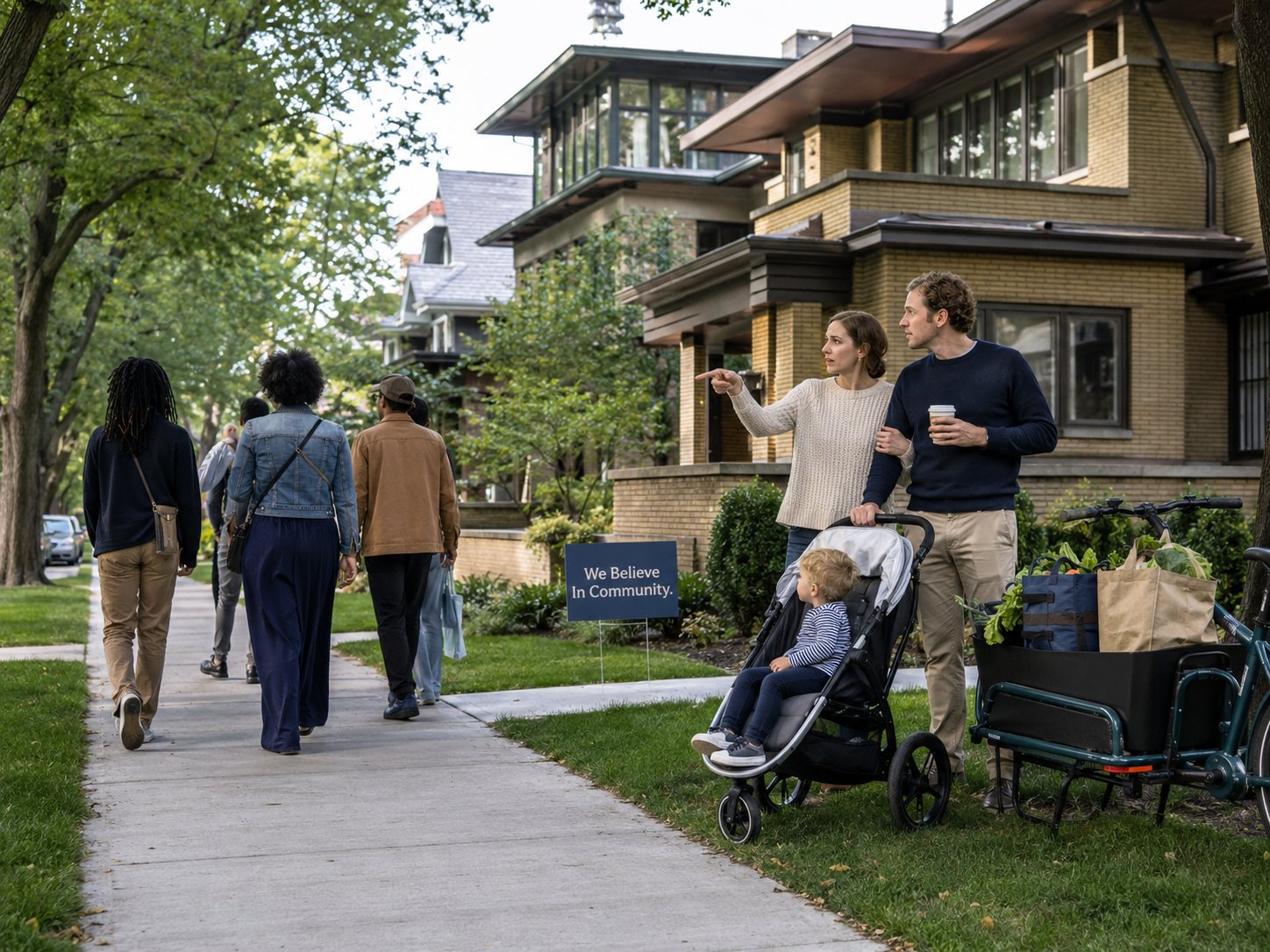
OAK PARK, IL — Citing the village’s historic homes, tree-lined streets, progressive values, and unparalleled opportunities to become quietly irritated by the practical consequences of those values, a growing number of young families are moving to Oak Park for its diversity, walkability, and the chance to complain about both.
“We wanted somewhere that felt inclusive, vibrant, and connected,” said new resident Amanda Pelletier, 36, who recently moved from Logan Square with her husband, two children, rescue dog, cargo bike, and deep suspicion that too many people are now using her block to get to the Blue Line. “Oak Park just has this amazing mix of people, architecture, schools, parks, and local businesses. It’s exactly what we were looking for, except now that we’re here, we do have some concerns.”
According to local real estate agents, Oak Park continues to attract families seeking what one described as “urban-adjacent moral comfort with suburban square footage,” a lifestyle that allows residents to live near Chicago while still expressing surprise whenever Chicago appears nearby.
“People want diversity,” said Realtor Mark Danforth, standing in front of a four-bedroom Prairie-style home listed for $849,000 and described as “steps from everything, but not in a way that affects parking.” “They want walkability. They want density, local shops, transit access, public schools, and a neighborhood where their children can grow up exposed to people from many different backgrounds. Then, after closing, they would like to know why so many people are walking past their house.”
Village officials say the trend reflects Oak Park’s longstanding appeal as a community where residents are deeply committed to shared values, provided those values are implemented at least three blocks away.
At a recent public meeting, several new residents praised the village’s character while raising questions about whether the character could be preserved by making it slightly less accessible to anyone who does not already live there.
“I’m very pro-transit,” said resident Brian Cheswick, who said he specifically chose Oak Park because his family could survive with one car, provided the second car remained available for emergencies, errands, school pickup, groceries, soccer, rain, heat, cold, and restaurants more than six blocks away. “But I do wonder if the train has to be quite so near the homes. Sometimes people get off it.”
Cheswick added that he fully supports walkable retail corridors, especially when they include coffee, yoga, bookstores, bakeries, wine bars, and restaurants with children’s menus that do not visibly acknowledge children. However, he expressed alarm that successful walkable retail corridors sometimes attract “walking.”
“It’s not that I oppose foot traffic,” Cheswick clarified. “We just need a balanced approach where local businesses thrive without customers arriving in a way that changes the feeling of the sidewalk.”
Many young families say Oak Park offers the ideal environment to raise socially conscious children who can identify architectural styles, compost correctly, and ask why every school fundraiser costs $125.
“We really wanted our kids to grow up in a place where they understand privilege, community, and civic responsibility,” said Pelletier, while drafting a Facebook post asking why the village had not done more to prevent teenagers from existing near the library after 4 p.m. “That’s why we moved here. Also, if anyone knows who keeps putting their garbage bins out before 5 p.m. the night before pickup, please DM me.”
Local parent groups have welcomed the new arrivals, many of whom have immediately joined online discussions about school equity, historic preservation, property taxes, leaf collection, and whether “walkability” should include people cutting across the corner of a lawn.
“It’s been wonderful to see so many new voices in the community,” said longtime resident Denise Booker, who has lived in Oak Park since 1987 and can identify a newcomer by the way they pronounce “Ridgeland.” “They bring energy, passion, and a fresh belief that every Oak Park issue can be solved with a listening session, a yard sign, and a strongly worded thread.”
Booker said she appreciates the enthusiasm but noted that some newer residents appear surprised to learn that living in a diverse, walkable village means encountering diversity while walking.
“There is sometimes a brief adjustment period,” Booker said. “People move here because they don’t want a gated suburb. Then they discover the gate was psychological.”
Village planners confirmed they are studying several proposals to address resident concerns, including traffic-calming measures, pedestrian-friendly streetscapes, bike improvements, and a new signage campaign reminding residents that the things they list as reasons for moving to Oak Park may occasionally be visible from their front porch.
“We hear residents clearly,” said Assistant Deputy Director of Community Alignment Trevor Malloy. “They want a community that is open, inclusive, active, sustainable, and connected. They also want fewer strangers, quieter sidewalks, more parking, less congestion, vibrant businesses, shorter lines, lower taxes, better services, and no new buildings that cast emotional shadows.”
Malloy said the village remains committed to finding a compromise that satisfies all residents equally, which he described as “the central Oak Park governing tradition of ensuring everyone leaves a meeting with concerns.”
At press time, the Pelletier family said they remained thrilled with their decision to move to Oak Park, though they had begun exploring whether River Forest might offer the same values with fewer people acting on them.